|
Muryojyuji Temple in Kawagoe, Saitama Prefecture
|
Muryojyuji Temple is located in Kawagoe, Saitama Prefecture. It was founded in 830, by Priest ENNIN, "JIKAKU-Daishi"
(794 - 864)
, a great monk who studied under SAICHO
(767 - 822)
and is said to have founded 700 temples, including Chusonji Temple in Iwate Prefecture and Risshakuji Temple in Yamagata Prefecture.
Muryojyuji originally consisted three temples: "Nakain",the Central Temple, "Nanin", the Southern Temple, and "Kitain", the Northern Temple, but now only Nakain, the Central Temple, remains.
In this page, I will share the information of Nakain Temple, Senba Toshogu Shrine and Kitain Temple, which related to the history of Muryojyuji Temple.
Muryojyuji Temple, Nakain
Nakain Temple was one of three temples, which consisted Muryojyuji Temple.
The temple is located approximately five hundred meters to the east from Hon-Kawagoe Station on the Shinjyuku Line of Seibu Railway.
Nakain Temple was originally located at the location of Senba Toshogu Shrine, which is approximately two hundred meters north of the current location. When Senba Toshogu Shrine was founded, Nakain Temple moved to the current location in 1633.
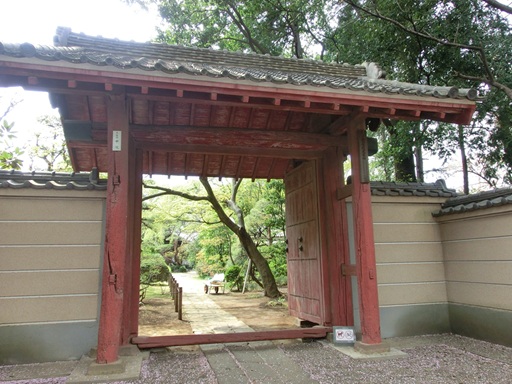
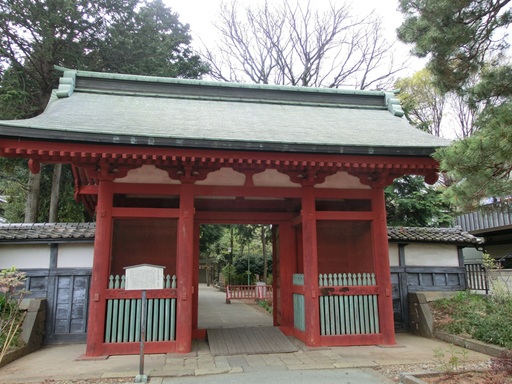
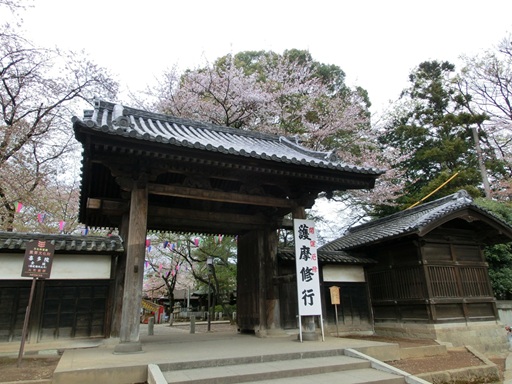
If you approach to "Nakain" from north, first you will see "Akamon", a red gate, shown in the below picture.
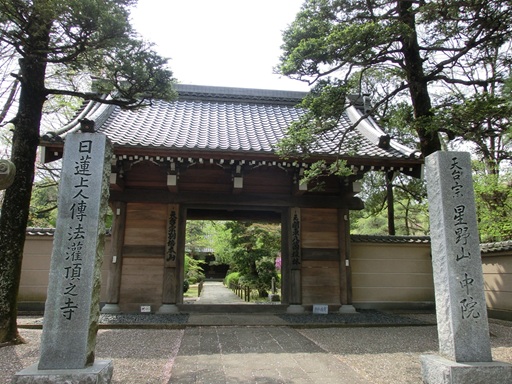
"Sanmon" Gate, the main gate, is located next to "Akamon" Gate.
Muryojyuji Tepmle's influence seems to have declined after its founding. But it was revived by Priest SONKAI
(1253 - 1332)
during the Kamakura Age
(1185 - 1333)
.
Also, the temple gave Holy-Priest NICHIREN
(1222 - 1282)
, the Eshinryu Denpo-Kanjo. In Shingon Esoteric Buddhism, Denpo-Kanjyo is the most important ritual for transmitting the secret teachings, performed by monks who have completed their training in order to qualify as "Ajari", masters.
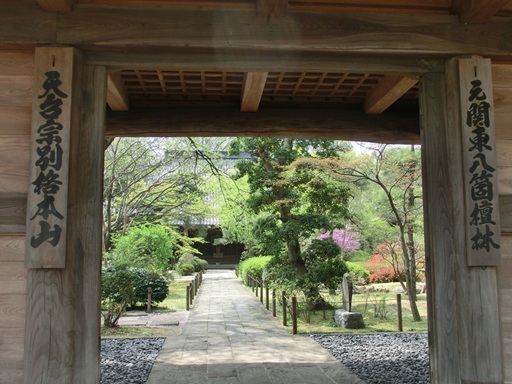
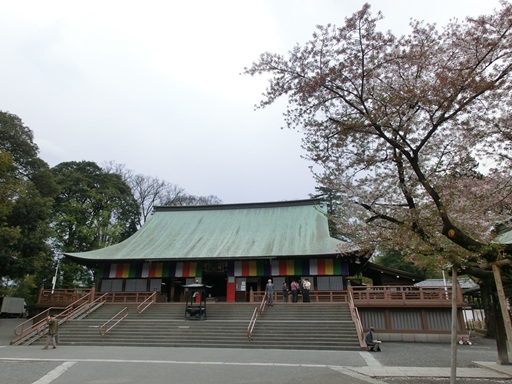
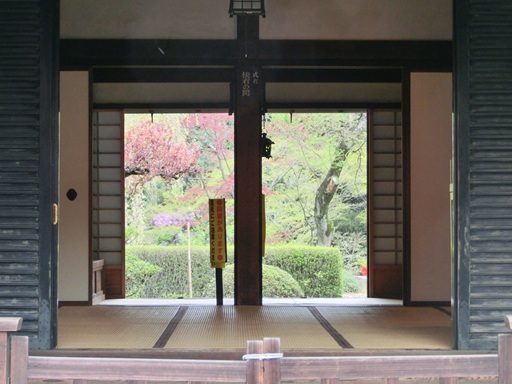
The view of the temple inside from "Sanmon" Gate was truly moving.
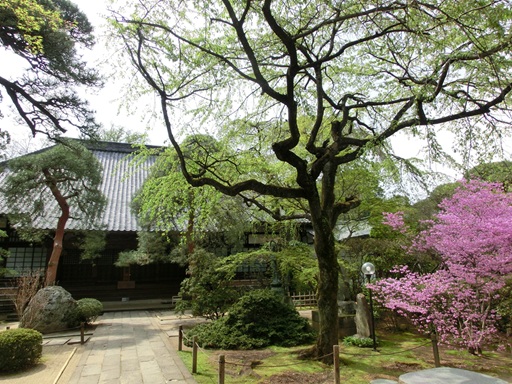
When I visited in April, beautiful flowers were blooming in front of the Main Hall.
According to temple legend, the Main Hall was rebuilt in 1733. I think the Main Hall we see today is that same rebuilt Main Hall.
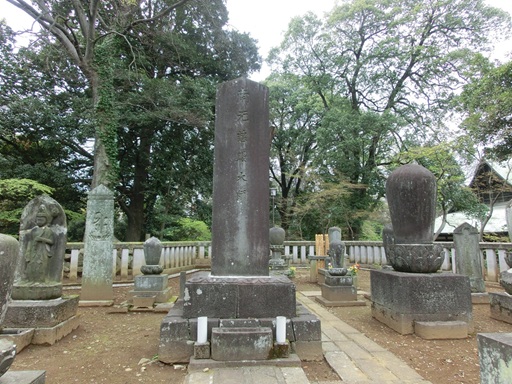
In the Nakain Temple, the grave of Kato Miki, the mother-in-law of SHIMAZAKI Toson
(1872 - 1943)
, one of great names in literature, is located.
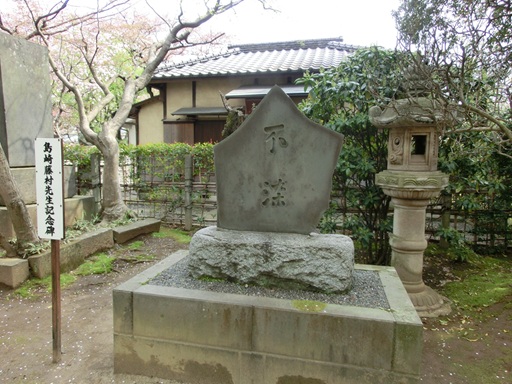
KATO Miki was a tea celemony teacher.
SHIMAZAKI Toson and his wife often visited Nakain Temple.
The tea room that SHIMAZAKI Toson gave to his mother-in-law was moved to Nakain Temple.
In front the tea room, the stone monument is located.
On the stone monument, the inscription written in SHIMAZAKI Tōson's handwriting, lists the title given to KATO Miki as her tea ceremony teacher.
Senba Toshogu Shrine was built in 1633 by the Priest TENKAI
(1536 - 1643)
of Kitain Temple, after TOKUGAWA Ieyasu
(1543 - 1616)
, the first "Shogun" in the Edo Age
(1603 - 1868)
, was died.
When the remains of TOKUGAWA Ieyasu were moved from Mt. Kuno in Shizuoka Prefecture to Nikko in Tochigi Prefecture, his remains stayed at Kitain Temple for four days and a memorial service was held there. This led for Priest TENKAI to found Senba Toshogu Shrine right next to Kitain Temple.
Please refer the page of "Nikko Toshogu Shrine":
http://cf916626.cloudfree.jp/HandE_Japan/TravelDestinations/Kanto/Nikko_Toshogu_E.html
Heading north from Nakain Temple is Senba Toshogu Shrine.
Senba Toshogu Shrine is now located at the site where Nakain Temple was originally located.
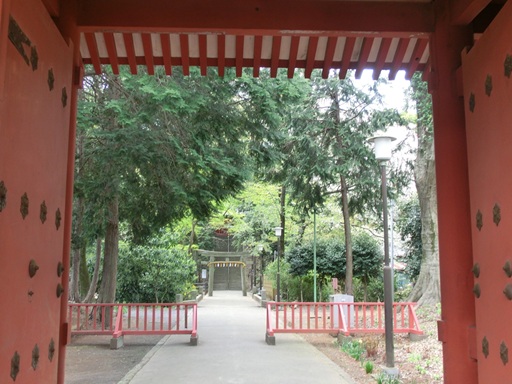
The below pictures show the "Zuishin-mon" Gate at the entrance to the temple area. "Zuishin" means Imperial guards during the Heian Age
(794 - 1185)
.
|
|
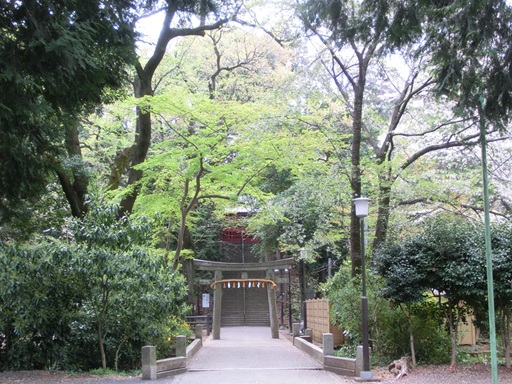
The approach to the shrine stretches out in a straight line from "Zuishin-mon" Gate.
Crossing the stone bridge over the moat, there was a stone "Torii" Gate.
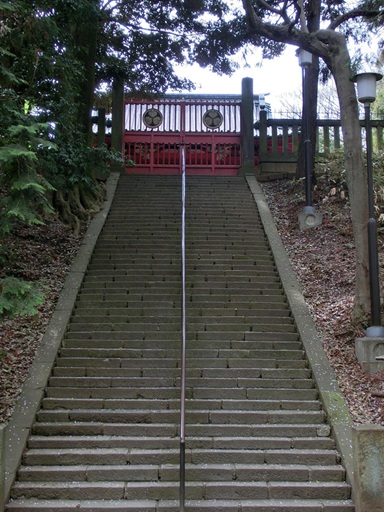
Beyond that, stone steps led up to a higher hill.
At the end of the steps, the main shrine building of Toshogu Shrine is located.
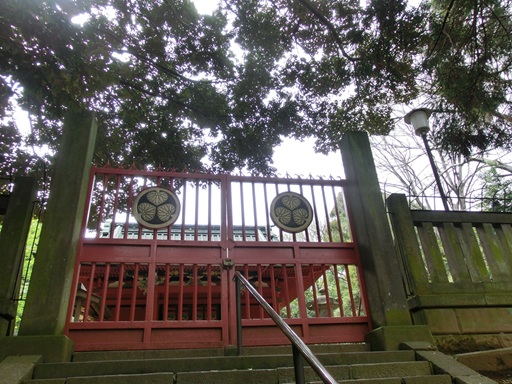
On the day I visited, the gate bearing the hollyhock crest was closed.
The hollyhock crest is the family crest of the TOKUGAWA Shogunate.
The gate is open to the public on Sunday and the national holidays.
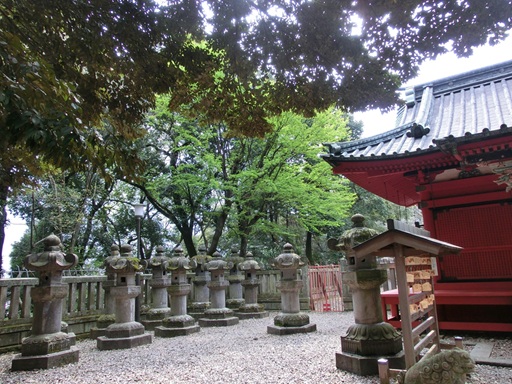
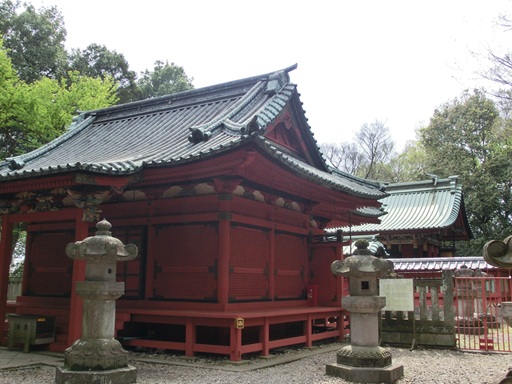
This is the main shrine building of Senba Toshogu Shrine as seen from the gate.
|
|
Senba Toshogu Shrine was destroyed in a major fire in 1638, just five years after its construction.
The main shrine building and other buildings were rebuilt two years later, in 1640.
Currently, all buildings of Senba Toshogu Shrine, including the main hall, stone torii gate, and "Zuishin-mon" gate, are designated as Important Cultural Properties of Japan.
Leaving Senba Toshogu Shrine, descending the stairs and heading north leads to Kitain Temple.
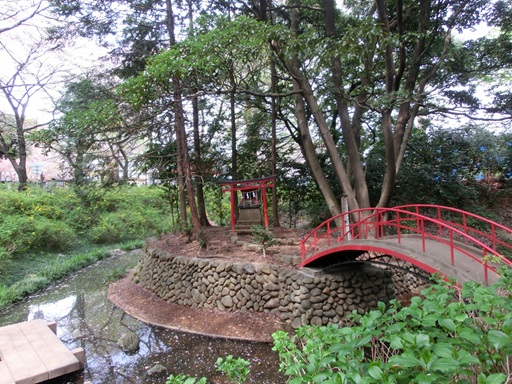
On the way to Kitain Temple, I took in the view of "Benzaiten Itsukushima" Shrine floating in the moat.
Muryojyuji Temple, Kitain
Kitain Temple was one of the three temples that formed Muryoju-ji Temple when it was founded in 830.
The temple flourished greatly after Priest TENKAI, who succeeded as the 27th head priest in 1599, earned the deep trust of TOKUGAWA Ieyasu.
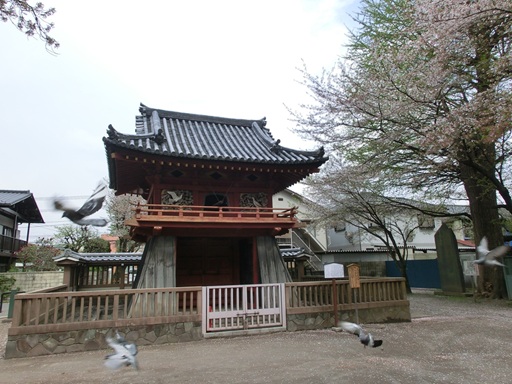
If you walk to the north from Senba Toshogu Shrine, the first thing you'll see is the Bell Tower Gate.
Records says the construction date of the Bell Tower Gate's was in 1633.
The bronze bell is said to have an inscription dating it to 1702.
There is a small hill to the west of the bell tower, with a series of stairs leading up to it.
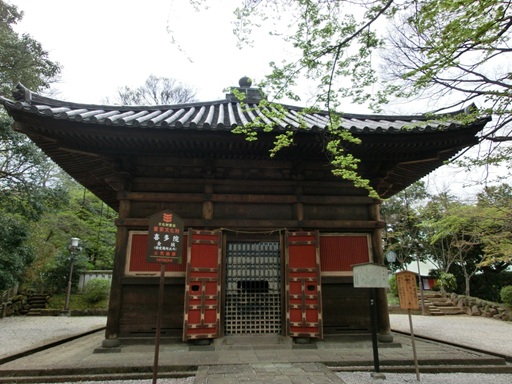
At the top of these stairs, the Jigen-do Hall is located.
Jigen-do Hall enshrines Priest TENKAI, who restored Kitain Temple at the beginning of the Edo Age.
Priest TENKAI passed away in 1643 at Kaneiji Temple in Ueno, Tokyo. Jigen-do Hall was built in 1645 by the order of TOKUGAWA Iemitsu
(1604 - 1651)
, the third "Shogun" in the Edo Age..
The tombstone of TENKAI can be seen at the back of Jigen-do Hall.
Returning to the bell tower and walking to the north, you will see the Sanmon Gate.
This Sanmon Gate was built in 1632 and is the oldest structure in Kitain Temple.
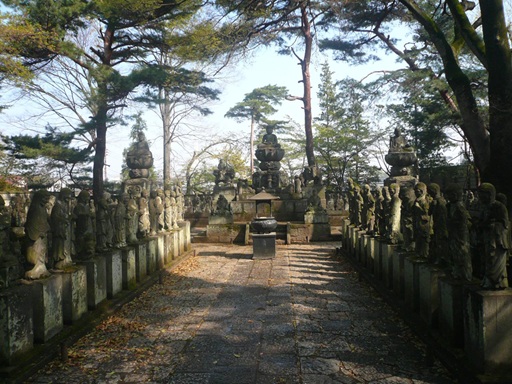
Passing through the Sanmon Gate and walking to the north, you will find the statues of "Gohyakurakan", the five-hundred Arhats.
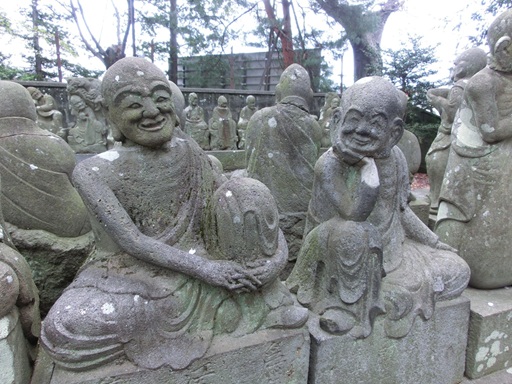
The statues of "Gohyakurakan" are lined up in an orderly way. Some of the statues have a humorous appearance.
|
|
"Gohyakurakan", the five-hundres Arhats include 533 statues of venerated figures dating back approximately 50 years from 1782 to 1825, as well as a total of 538 statues, including Shakyamuni Buddha, Manjusri, Samantabhadra, Amida Buddha, and Jizo Bodhisattva.
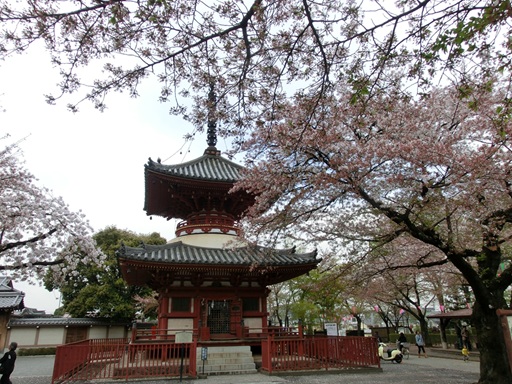
To the west of "Gohyakurakan", the "Tahoto" Pagoda is located.
The "Tahoto" Pagoda was built in 1639.
The Pagoda was temporarily relocated in 1910, and then relocated to its current location in 1973.
To the west of the Tahoto Pagoda, the main buildings of Kitain Temple are located.
As you go further into the temple area, you will come across the imposing Jikeido Hall, built at the top of a staircase.
To the right of the Jikeido Hall, the guest hall and the shoin study are located.
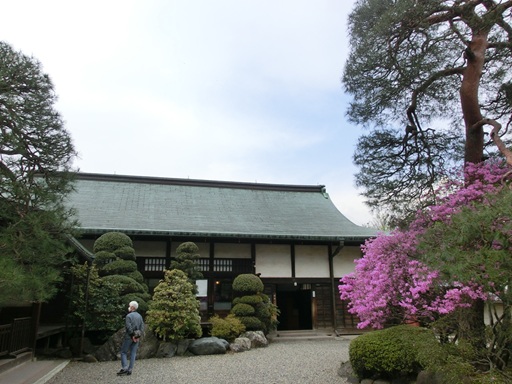
The above picture shows "Kuri", the priest's living quarters or the kitchen of a temple, which serves as the entrance to the guest hall and the shoin study.
This hall enshrines Priest Jie
(912 - 985)
, the 18th abbot of Enryaku-ji Temple on Mt. Hiei, located between Kyoto and Shiga Prefectures.
It was destroyed in a great fire in 1638, but was rebuilt promptly the following year.
To the right of the Jikeido Hall, the guest hall and the shoin study are located.
The above picture shows "Kuri", the priest's living quarters or the kitchen of a temple, which serves as the entrance to the guest hall and the shoin study.
|
|
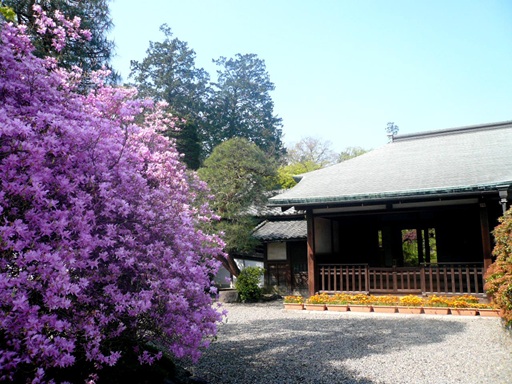
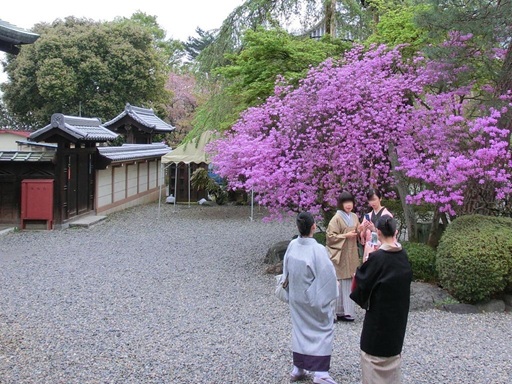
When I visited in April, beautiful red-purple flowers were in bloom in front of "Kuri".
Women in kimono stood out against the beautiful flowers.
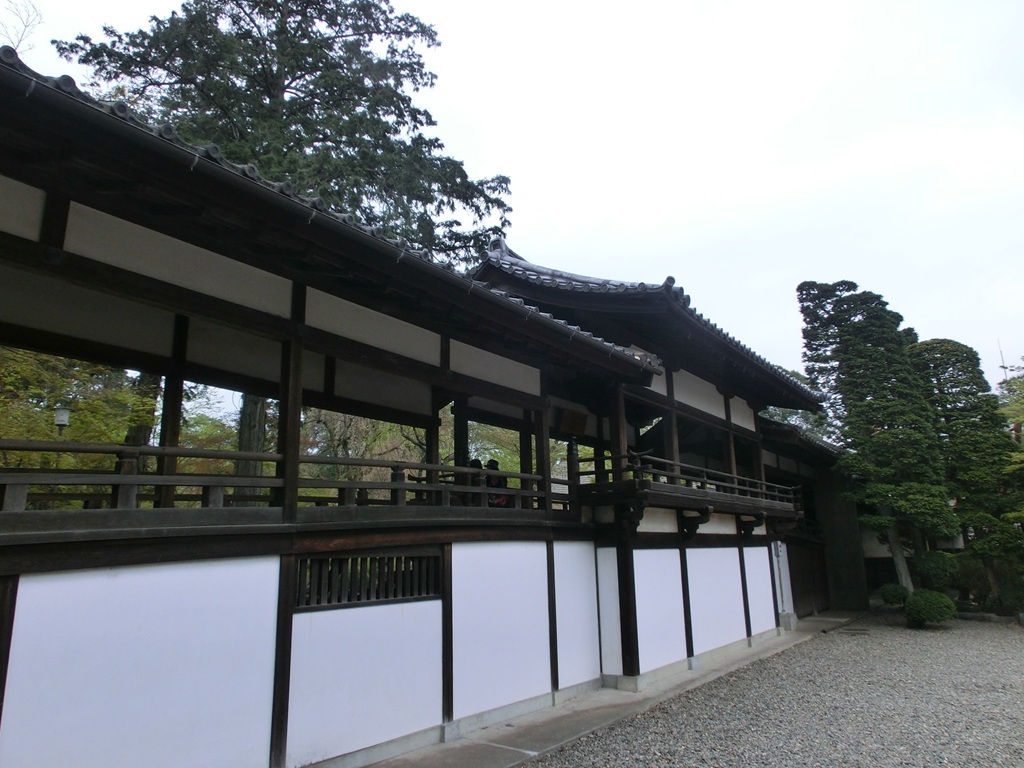
The corridor, shown in the below picture, connects "Kuri" to the Jikeido Hall.
The guest hall and the shoin study of Kitain Temple are located on the opposite side of the corridor, separated by "Kuri".
TOKUGAWA Iemitsu relocated "Shogun's villa located on Momijiyama in Edo Castle, in order to rebuild Kitain Temple, which was destroyed in the Kawagoe fire in 1686.
No palace buildings from the Edo Age remain at Edo Castle. The only the guest hall and the shoin study of Kitain Temple remain as reminders of the castle's original architecture.
Please refer the page of "Edo Castle":
http://cf916626.cloudfree.jp/HandE_Japan/TravelDestinations/Kanto/EdoCastle_E.html
The guest hall contains the room where TOKUGAWA Iemitsu was born, and the shoin study contains the makeup room of Kasuga-no-Tsubone, known as Iemitsu's wet nurse.
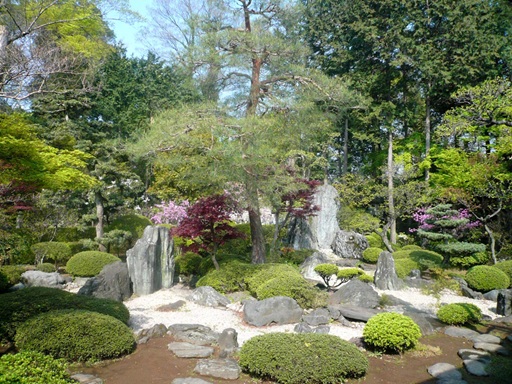
The shoin courtyard also has a lovely, calming atmosphere.
The shoin garden also has a lovely, calming atmosphere. The garden is home to cherry trees planted by Iemitsu.
Nakain, Senba Toshogu Shrine and Kitain are very historical sites.
The guest hall, the shoin study and "Kuri" in Kitain Temple are designated as important cultural properties of Japan.
|
|
|
How to get there
From Tokyo, take a train on the Seibu Shinjyuku Line to Hon-Kawagoe. Alternatively, take a JR Saikyo Line or Tobu Tojyo Line to Kawagoe. Muryojyuji Temple is located to the north-east from these stations. It takes you approximately fifteen minutes on foot.
Other Historical Sites near by:
Ruins of Kawagoe Castle
Kawagoe Historical District
Ruins of "Kawagoe Yakata"
Ruins of Hachigata Castle
Ruins of Sugiyama Castle
|
|
 Home Page in Japanese: "Shane's HomePage"