|
The Ruins of Kawagoe Castle
|
Kawagoe Castle was the castle where the GO-HOJYO clan, successors of HOJYO Soun
(1432 or 1456 - 1519)
, and the OGIGAYATSU Uesugi clan fought for supremacy in the Kanto Area.
Kawagoe Castle was built in 1457.
It is said that OGIGAYATSU-UESUGI Mochitomo
(1416- 1467)
ordered the construction of the castle by OTA Michizane
(1411- 1488)
and his son Dokan
(1432- 1486)
.
In 1537, the GO-HOJYO clan captured Kawagoe Castle. In an attempt to turn the situation around, the OGIGAYATSU-UESUGI clan teamed up with the YAMAUCHI-UESUGI clan in 1546 to retake the castle, but they were defeated by the GO-HOJYO clan.
This battle is known as the Kawagoe Night Battle, and from this point on, the GO-HOJYO clan is said to have strengthened their control over the entire Kanto Area.
During the Edo Age
(1603 - 1868)
, because the castle was located in a position to protect the north of Edo where the residence of "Shogun" was located in the Edo Age, the feudal lords, who were relatives of "Shogun" and were in important positions in the Edo Shogunate, became the castle lords of Kawagoe Castle.
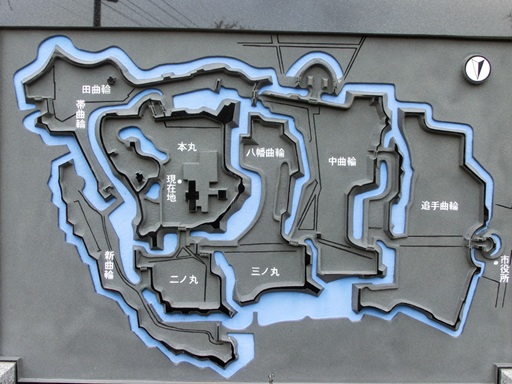
In 1639, MATSUDAIRA Nobutsuna, the lord of Kawagoe Domain, expanded and renovated Kawagoe Castle, completing a castle complex consisting of the main bailey, second bailey, third bailey, and other baileies, four turrets, and 13 gates. Each bailey was surrounded by moat.
After visiting Senba Toshogu Shrine and Kitain Temple, I headed north towards Kawagoe Castle.
My first stop was the remains of the Fujimi Turret, located at the southern end of Kawagoe Castle.
Please refer the page of "Muryojyuji Temple in Kawagoe" for the detail information of Senba Toshogu Shrine and Kitain Temple:
http://cf916626.cloudfree.jp/HandE_Japan/TravelDestinations/Kanto/Kawagoe_Muryojyuji_E.html
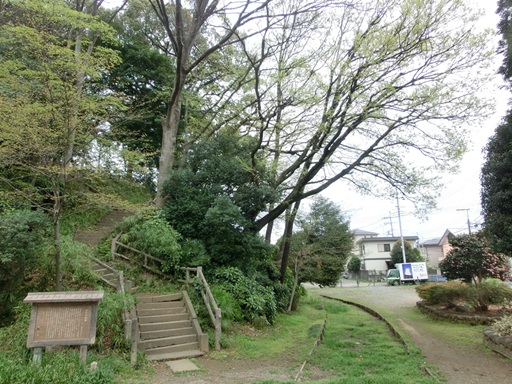
A large, lush hill covered in trees appeared in the middle of a residential area.
This hill is the site of the Fujimi Turret.
The lower part of the hill was a moat at the time.
At the site of the moat, there is a monument marking the site of the Tamakuruwa Gate.
|
|
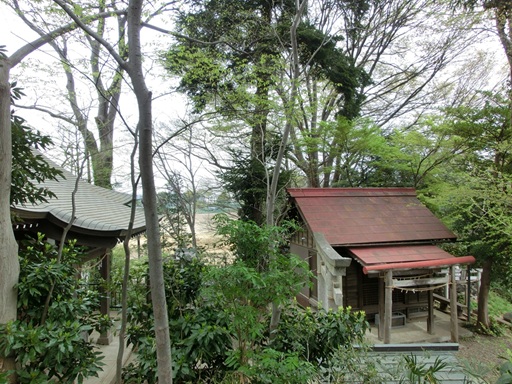
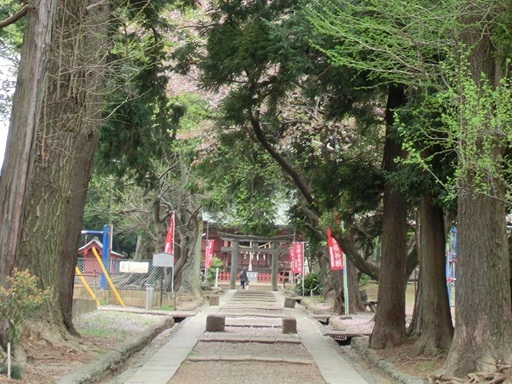
Fujimi Inari Shrine is located on the site of the Fujimi Turret.
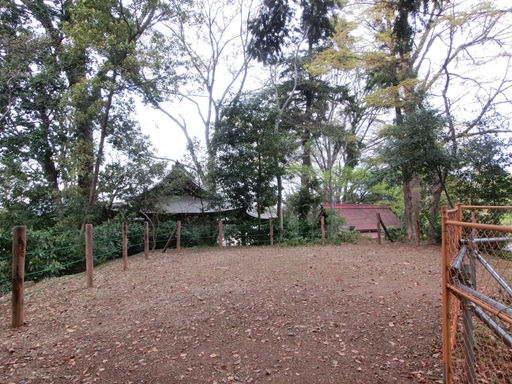
Behind it, there is an empty area that appears to be the site of the turret.
If you head further north after visiting the Fujimi Tower, you will enter the remains of Kawagoe Castle's main bailey.
Walking up the narrow slope on the east side, you will find Miyoshino Shrine.
Miyoshino Shrine was originally founded in the Heian Age
(794 - 1185)
. It was rebuilt in 1624 by the castle lord at the time, SAKAI Tadakatsu
(1587- 1662)
.
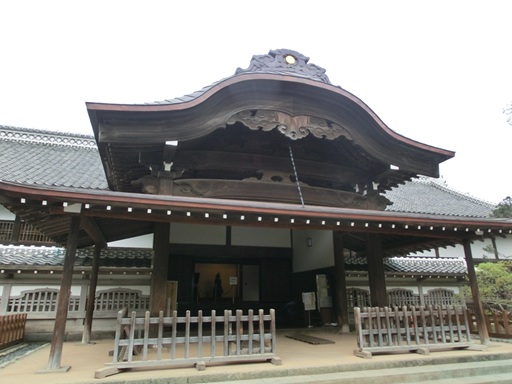
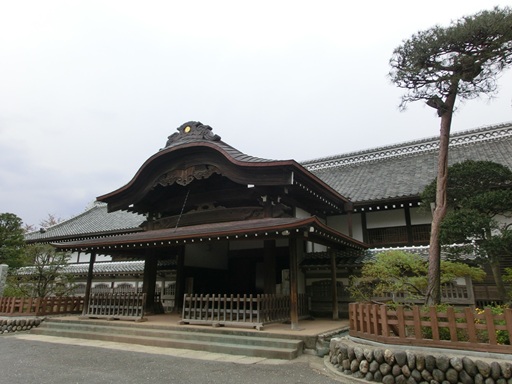
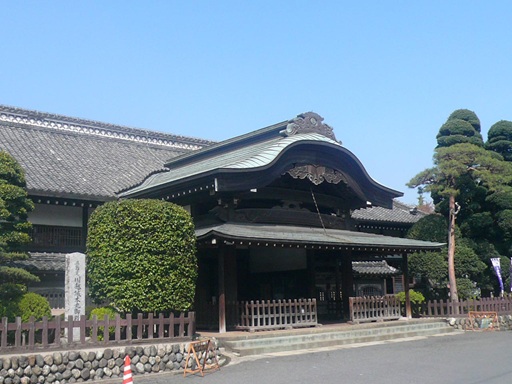
Further ahead, Kawagoe Castle Palace of the main bailey is located.
It was built in 1848 by the feudal lord MATSUDAIRA Narinori
(1797- 1850)
.
|
|
When the palace building in the main bailey was built, it had sixteen buildings and the area of 3,320 suare meters.
After the
Meiji Age
(1868 - 1912)
, they were gradually demolished. Now only the entrance hall, the large hall, and the relocated and restored chief retainer's rooms remain.
Currently, only four castles have their original palaces remaining from the Edo Age. Kawagoe Castle's Palace in the main bailey is a very valuable cultural heritage. The other three castles are Kakegawa Castle, Nijyo Castle and Kochi Castle.
Please refer the page of "The Ruins of Nijyo Castle" for the detail information:
http://cf916626.cloudfree.jp/HandE_Japan/TravelDestinations/Kansai/NijyoCastle_E.html
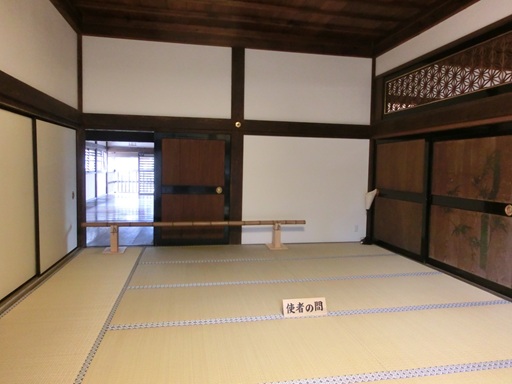
The interior of the Palace in the main bailey is a long, narrow building surrounded by corridors, with several rooms leading between the corridors.
The photo above shows the Messenger's Room.
I think messengers waited in this room to be called.
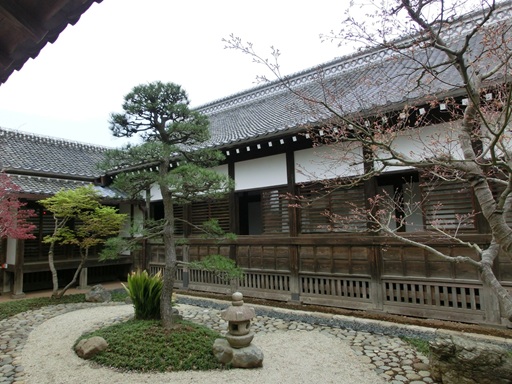
The chief retainer's quarters were built perpendicular to the Palace in the main bailey.
This is the courtyard between the palace and the chief retainer's quarters.
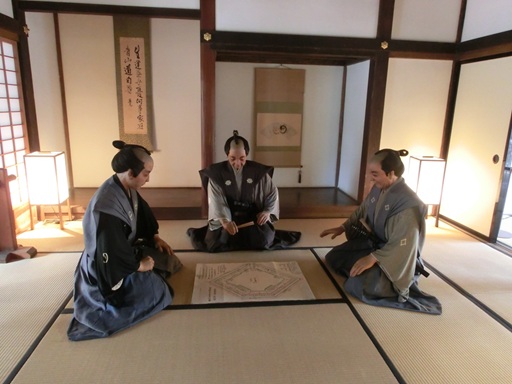
Dolls of the chief retainers from that time were displayed in the chief retainer's room.
|
|
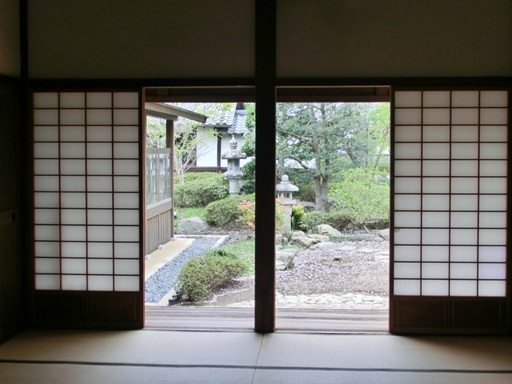
As shown in the photo above right, the chief retainer's quarters offered a view of the garden.
The view was very impressive.
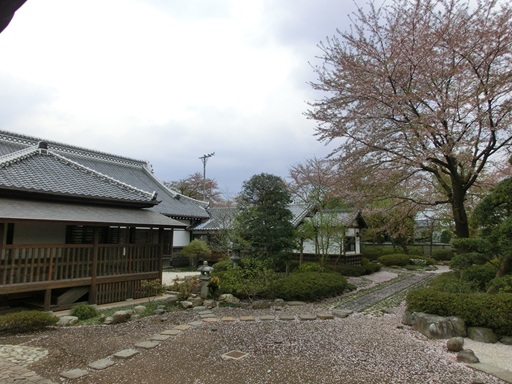
The below photo shows the Palace in the main bailey as seen from the chief retainer's quarters.
The Palace in the main bailey was a modest building.
Most of Kawagoe Castle's original castle areas have been urbanized.
Only a small part of the area around the Palace in the main bailey remains as it was back then.
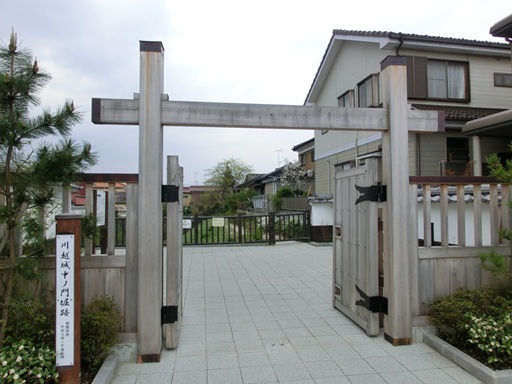
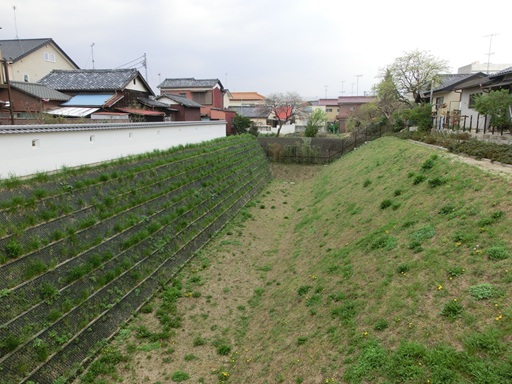
To the north of the ruins of Kawagoe Castle, the remains of the Nakanomon moat is located.
Most of Kawagoe Castle's moats from the Edo Age have been filled in, but the remaining Nakanomon moat was recreated in 2008 and 2009.
Most of Kawagoe Castle's areas have been urbanized, and no traces of its appearance from the Edo Age remain.
But the Palace in the main bailey is extremely valuable.
|
|
|
How to get there
From Tokyo, take a train on the Seibu Shinjyuku Line to Hon-Kawagoe. Alternatively, take a JR Saikyo Line or Tobu Tojyo Line to Kawagoe. The ruins Kawagoe Castle are located to the north-east from these stations. It takes you approximately twenty-five minutes on foot.
Other Historical Sites near by:
Muryojyuji Temple in Kawagoe
Kawagoe Historical District
Ruins of "Kawagoe Yakata"
Ruins of Hachigata Castle
Ruins of Sugiyama Castle
|
|
 Home Page in Japanese: "Shane's HomePage"