"Kaya" Historical District in Kyoto Prefecture
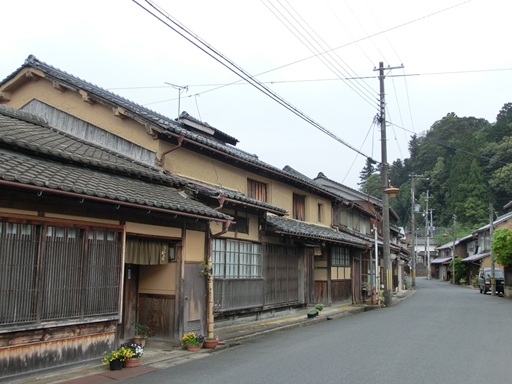
"Kaya" is located on the Tango Peninsula. "Kaya" is a town that prospered through "Tango Chirimen" silk crepe. Crepe (crepe, French: crêpe) is a fabric made from plain-woven silk. It is a type of crepe weave, but the term refers to fabrics woven with silk.

In April, 2012, I visited "Kaya", after visiting "Amanohaashidate" and "Ineura" Boat Houses.

Please refer the page of "Amanohashidate":
http://cf916626.cloudfree.jp/HandE_Japan/TravelDestinations/Kansai/AmanoHashidate_E.html
Please also refer the page of "Ineura" Boat Houses:
http://cf916626.cloudfree.jp/HandE_Japan/TravelDestinations/Kansai/Ineura_E.html

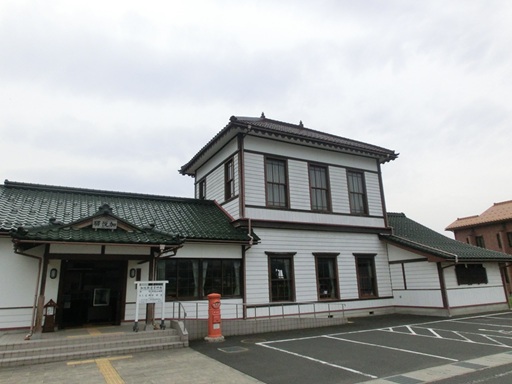
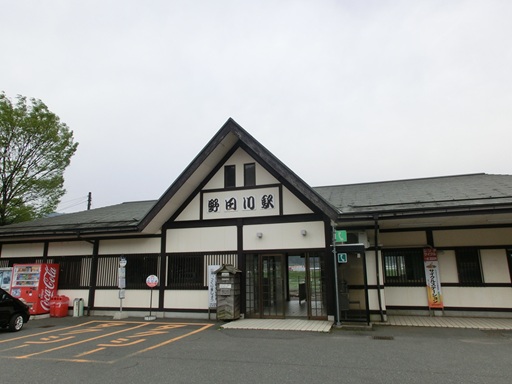
Kaya is located about five kilo-meters south of Yosano Station on the Kyoto Railway Miyatoyo Line. I rented a bicycle at Yosano Station and headed to "Kaya". The below photo shows Yosano Station.
The Kaya Railway once ran from Yosano Station (named Tango-Yamada Station at the time of Kaya Railway) to Kaya. The Kaya Railway opened in 1926. At the time, Kaya was a production area for Tango crepe, and the line was built to transport this crepe to Kyoto.

However, in 1985 (Showa 60), the Japan National Railways (at that time) Miyazu Line, which connected at Tango-Yamada, discontinued freight operations, forcing the Kaya Railway to cease freight transport as well. The Kaya Railway Line was abandoned on May 1, 1985.

The photo below shows the view west from the south side of Yosano Station.
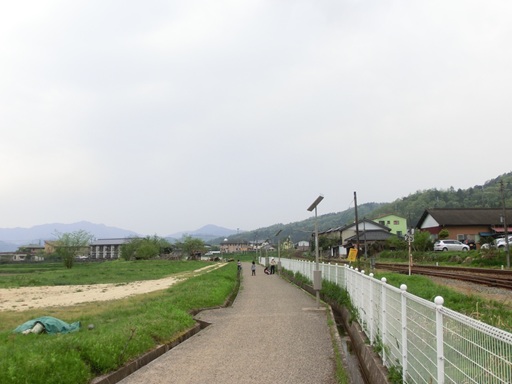
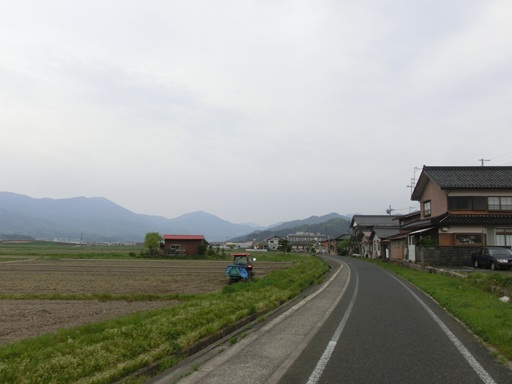
The sites of the former Kaya Railway tracks are now the cycling path. To the right, you will see the tracks of the Kyoto Railway Miyatoyo Line.

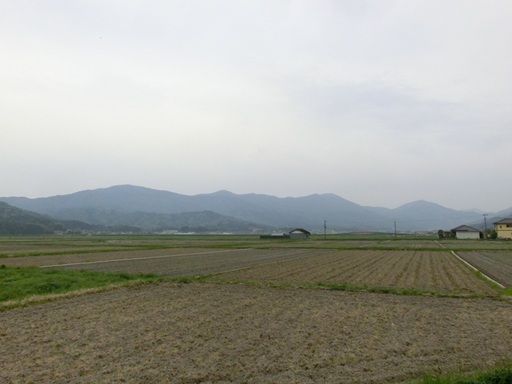
From Yosano Station, the sites of the former Kaya Railway tracks continue south through idyllic rural scenery.

You will also see the scenery on the below movie:

After cycling for about thirty-five minutes from Yosano Station, I arrived at the site of the former Kaya Railway's Kaya Station.

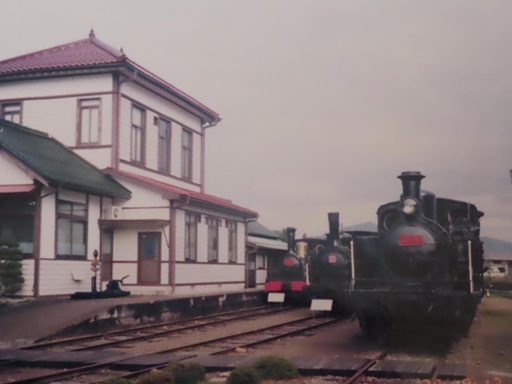
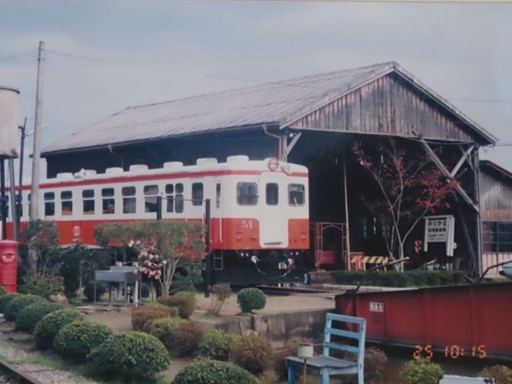
It has been passed thirty-nine years, since the Kaya Railway became abandoned in 1985. Kaya Station previously had a steam locomotive plaza, where many trains that ran on the Kaya Railway were displayed. The photos below show what it looked like when I visited in 1991.

Unfortunately, this steam locomotive plaza no longer exists.

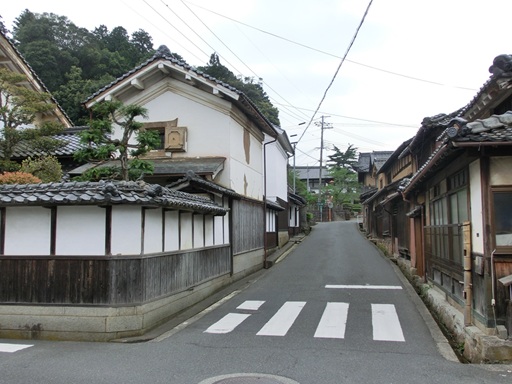
If you head west from the former Kaya Station building, you will find the townscape of Kaya. There are also many old buildings around the intersection with the main road in Kaya Town.

If you step west from this intersection, you will find yourself in an area with many old buildings. The photo below shows the former family residence of SHIMOMURA Yoshichiro, which was formerly Chino Post Office.

The sound of operating looms could be heard from around here. It appears that crepe production continues to this day in Kaya.

Please take a look at the video below, which was taken at this location. You can hear the sound of looms.

Okazaki, where I have lived since I was a small child, used to be a spinning town. There was a large spinning factory beside the route to my elementary school, and I often heard the sound of looms on my way home from school. The sounds echoing through the streets of Kaya are the sounds of looms I heard as an elementary school student. They brought me back very nostalgic memories.

Please refer the pages of "Historical Sites in Okazaki" :
http://cf916626.cloudfree.jp/HandE_Japan/TravelDestinations/TravelDestinations_in_Chubu.html#Okazaki

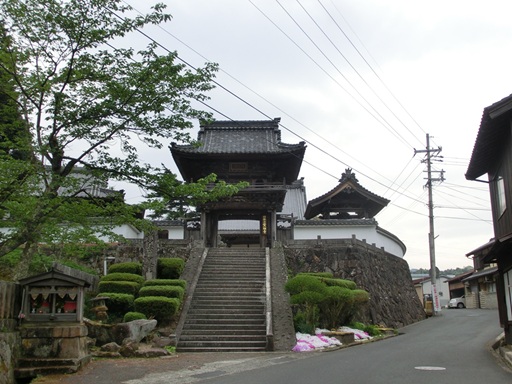
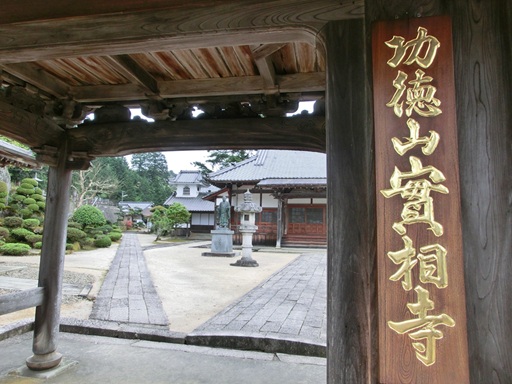
Jissoji Temple is located on a hill just ahead.

This place is located on the southern edge of an area where old settlements are concentrated. There are many other temples and shrines nearby, giving it the appearance of a castle town with a temple district. In fact, at the end of the Muromachi Age (1336 - 1573), an old castle was located in Kaya, and it seems Kaya used to be a castle town.

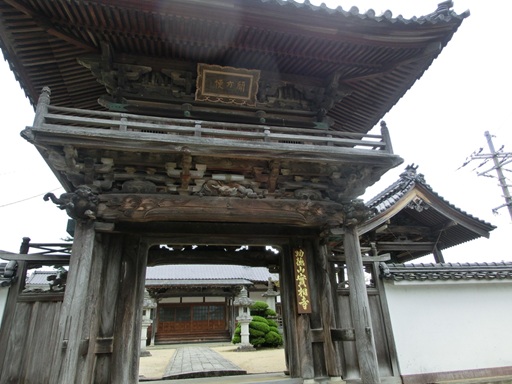
The bell tower gate of Jissoji Temple, located at the top of stone steps, was impressive.

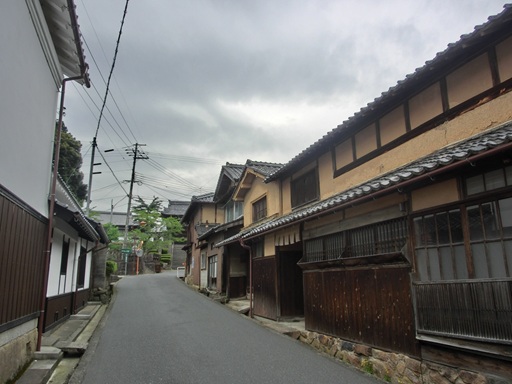
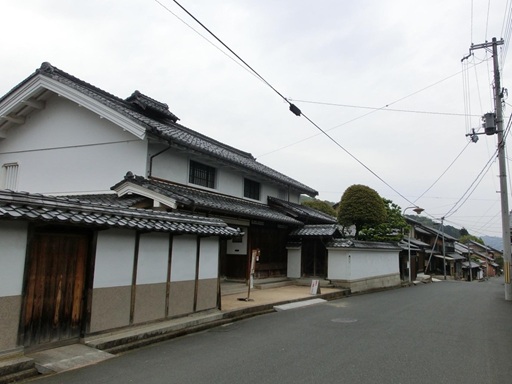
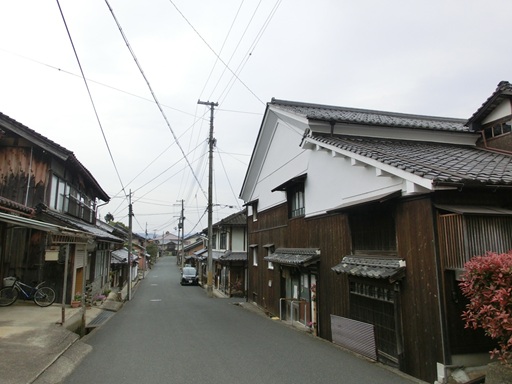
Old houses line the road leading north from Jissoji Temple. This road is called "Chirimen Kaido", the road of crepe. Before the Kayo Railway opened, "Tango Chirimen", silk crepe produced in Tango Area, was likely transported along the road to Kyoto.

The former BITO family residence is shown on the left in the photo above. The former BITO family residence was built in 1863 at the end of the Edo Age (1603 - 1868). The BITO family was a raw silk crepe wholesaler and also served as village headmen.

The former BITO family residence is open to the public. The residence was expanded and renovated during the Meiji(1868 - 1912) and Taisho Age(1912 - 1926). A Western-style building was added in 1928.

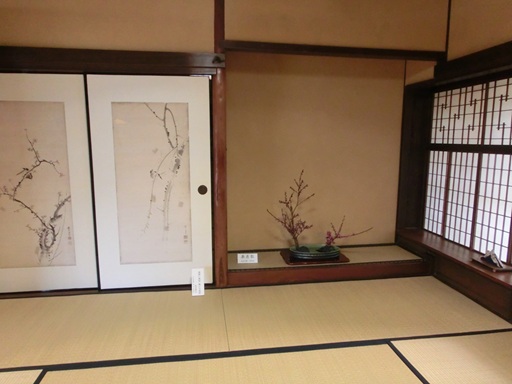
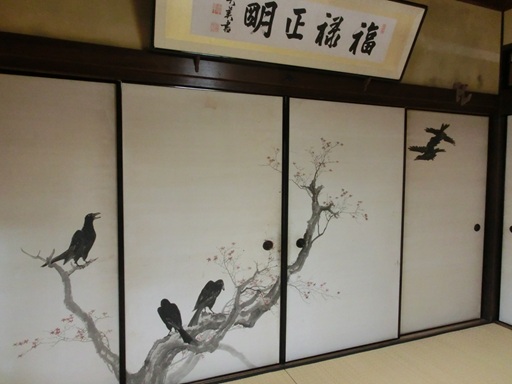
The above two pictures show the interior of the Japanese-style rooms. The sliding screen paintings are very beautiful.

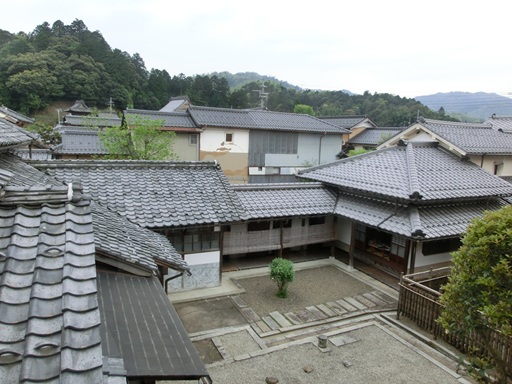
From the second floor, you will look down on the garden and buildings of the former BITO family residence.

The former BITO family residence is designated as an important cultural property of Japan.

After visiting the former BITO family residence, I headed north along "Chirimen Kaido". The houses line the gently undulating terrain.

Kaya's streets, which strongly retain the characteristics of a weaving town, have been designated as an Important Preservation District for Groups of Traditional Buildings.

How to get there
From Tokyo, take a "Nozomi" on the Tokaido Shinkansen, to Kyoto. Take a Limited Express "Hashidate" from Kyoto to Yosano. From Osaka, take a Limited Express "Konotori" to Fukuchiyama and change to "Hashidate". Take a bus from Yosano Station to "Chirimen-Kaido". Kaya Historical District is approximately three minute walk from the bus station.

Other Historical Sites near by:
Amanohashidate
Ineura Boathouses
Yuhigaura Hotspring
Maizuru
Miyazu
Ruins of Fukuchiyama Castle

Go to the top page of "Historical and Exotic Japan":
http://cf916626.cloudfree.jp/HandE_Japan/HandE_Japan.html

Home Page in Japanese: "Shane's HomePage"
http://cf916626.cloudfree.jp/index.html