|
Amanohashidate, Kyoto Prefecture
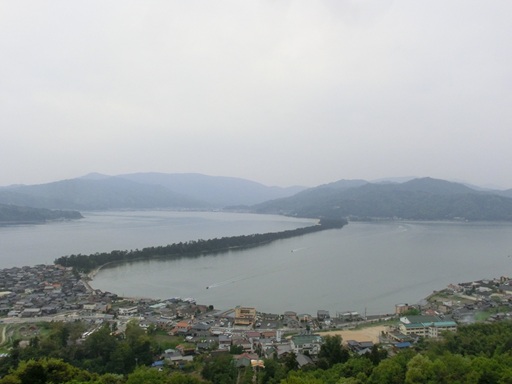
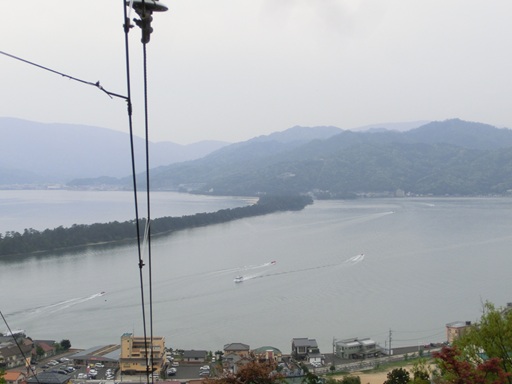
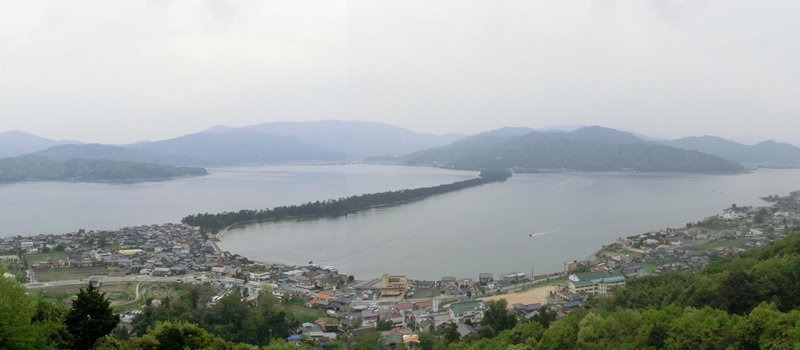
Amanohashidate is one of "Three Most Scenic Spots of Japan". Amanohashidate is a narrow sandbar jutting out into Miyazu Bay in the northern part of Kyoto Prefecture. The sandbar that makes up Amanohashidate is over 3.5 kilometers long. It is so long that it almost completely separates Miyazu Bay, turning the Aso Sea to the west into a lake. I rented a bicycle in front of Amanohashidate Station and rode around Amanohashidate. My first stop was Chionji Temple, which is close to Amanohashidate station. 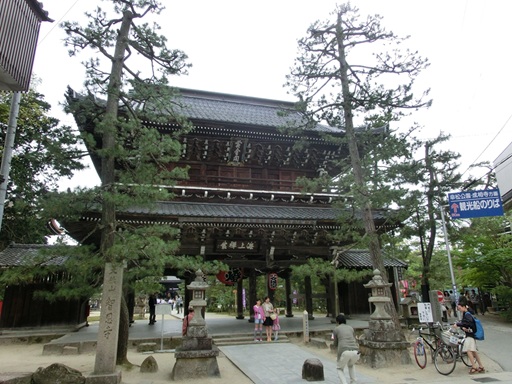
Chionji Temple is a historic temple founded in 808 as a temple commissioned by Emperor Heizei. 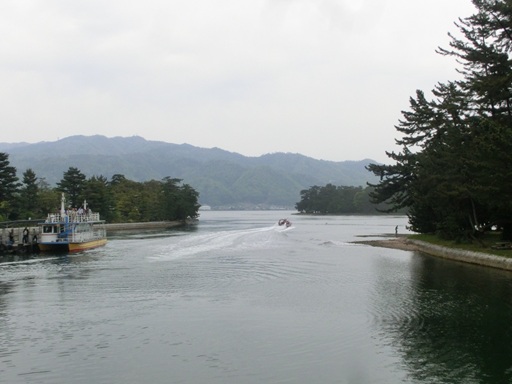
Chion-ji Temple faces "Monju-no-Kirido", a waterway at the southern end of Amanohashidate that connects the Aso Sea with Miyazu Bay. 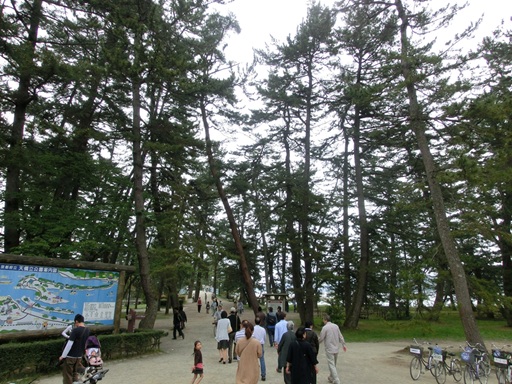
After crossing two bridges, I arrived at the sandbar of Amanohashidate. At Amanohashidate, a pine forest stretches along the sandbar. There were many tourists in the area. It was a pleasant ride through the pine forest. However, it would be regrettable to just pass it by, so I decided to take advantage of the opportunity to take in the view of "Aso Sea" to the west of Amanohashidate. 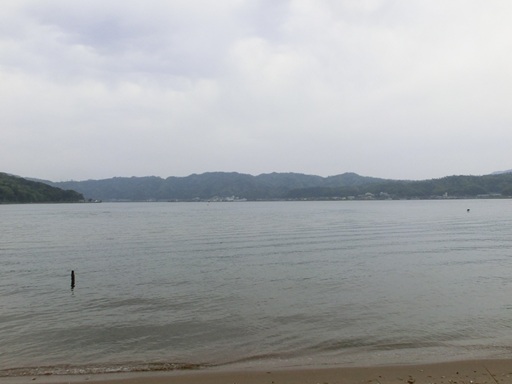
"Aso Sea" is connected to Miyazu Bay at "Monju-no-Kirido". "Aso Sea" is blocked by Amanohashidate and it is almost like a lake. Riding a bicycle north through the pine forest, I came across Amanohashidate Shrine. 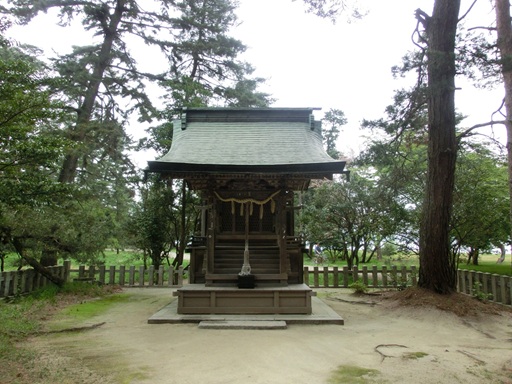
It was once located within Chionji Temple, but was moved to this location in the middle of the Muromachi Age (1336 - 1573).Heading further north from Amanohashidate Shrine, I looked out over Miyazu Bay from near the base of Amanohashidate. Miyazu Bay is an open sea that connects to the Sea of Japan, located to the east of Amanohashidate. 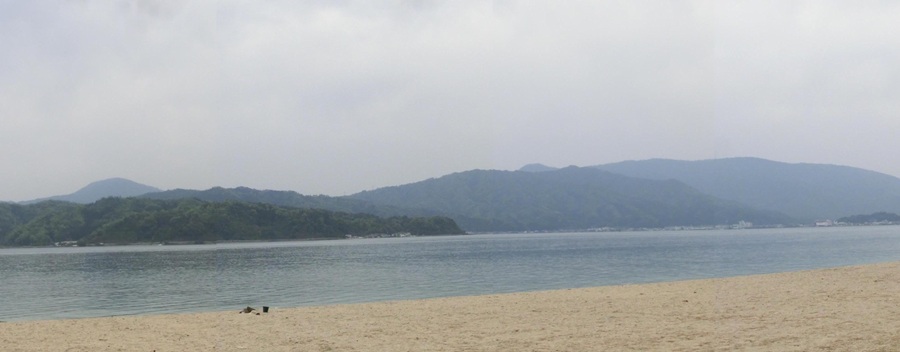
Beyond the sandy beach, the calm Miyazu Bay lay. The view of the pine trees of Amanohashidate and this beach is truly a beautiful coastal scenery of white sand and green pines. Near the base of Amanohashidate, a monument to Amanohashidate is located. It was a magnificent monument with a sense of history. 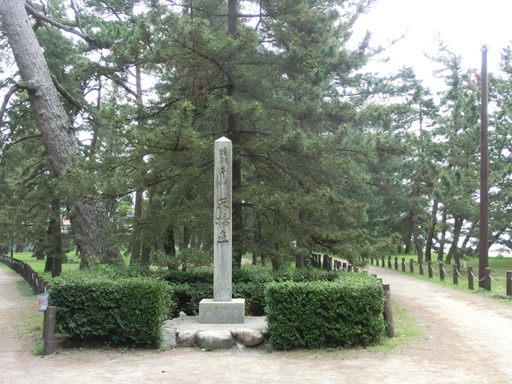
It took me approximately twenty minutes by bicycle on 3.5km of Amanohashidate ride from Chionji Temple to the base of Amanohashidate. The below photo shows Amanohashidate as seen from the near the base of Amanohashidate by beach at Aso Sea. 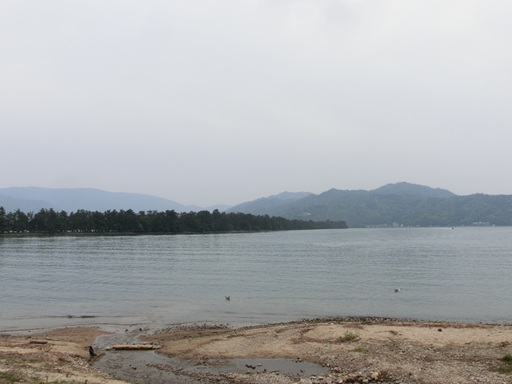
This view was also a beautiful coastal scenery of white sand and green pines. At the base of Amanohashidate, Kago Shrine, the Ichinomiya of Tango Province, is located. The history of Kago Shrine seems to date back to the Hakuho Age (645 - 710).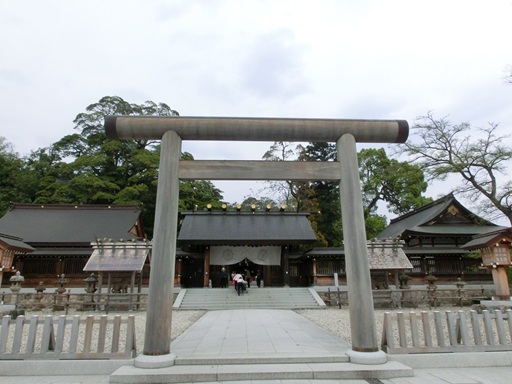
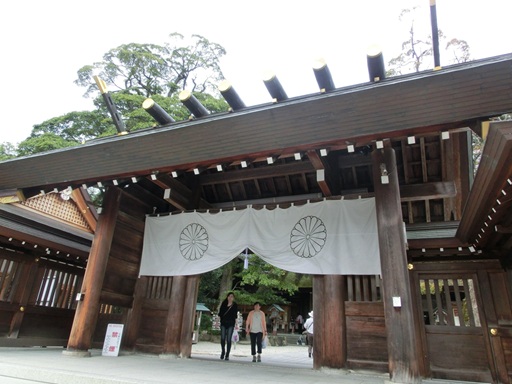
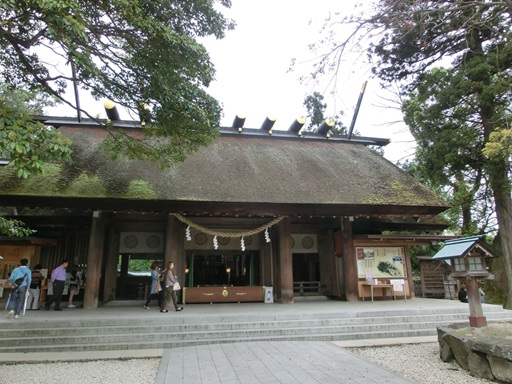
I went through the second and third "Torii Gates" and headed towards the worship hall of Kago Shrrine. The shrine gate, shown in the below-left photo, beyond the third torii gate was impressive. |