|
Institute for National Study in Tokyo
|
In Tokyo, many areas that were once the residences of feudal lords during the Edo Age have now been transformed into parks, resulting in a relatively large areas of forest remaining, compared to other large cities.
The Institute for Nature Study, located about a ten minute walk east from Meguro Station, is also one of the former sites of "Daimyo", feudal lords residences from the Edo Age
(1603 - 1868)
. A vast forest of approximately 200,000 square meters stretches across this area.
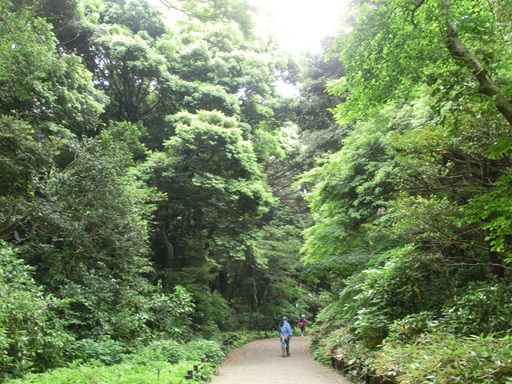
Upon entering the Nature Education Park, one finds oneself in a deep forest.
It is said that people settled in this area during the middle "Jyomon" Age
(14,000 years ago - 300 to 500 years B.C.)
, and that a powerful clan known as the "Shirokane Chojya",Shirokane Millionaire, established their residence here during the Muromachi Age
(1336 - 1573)
.
During the Edo Age, this area was the secondary residence of MATSUDAIRA Yorishige
(1622 - 1695), the Feudal Lord of the Takamatsu Domain.
Although difficult to see due to the dense foliage, an earthen embankment continues to the right of the walking path.
Perhaps this is a remnant of a mansion from the Muromachi Age.
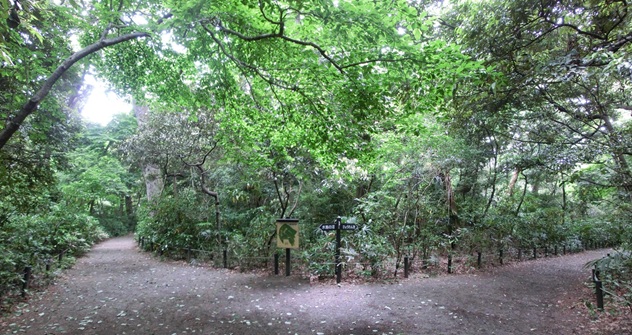
Further ahead, the path forked in two.
Taking the left path leads to the site of the residence of a wealthy man from the Muromachi Age.
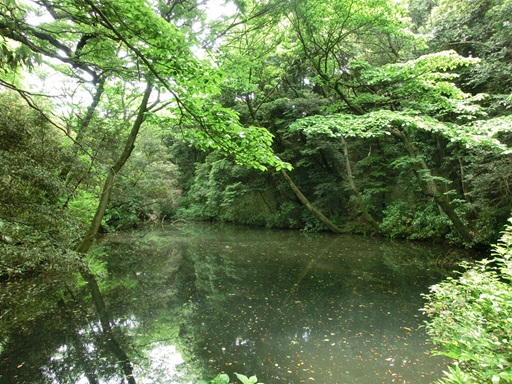
Taking the right path leads to the gourd-shaped pond, the site of the garden of the MATSUDAIRA family's lower residence, the lords of the Takamatsu Feudal Domain.
First, I headed towards a gourd‐shaped pond.
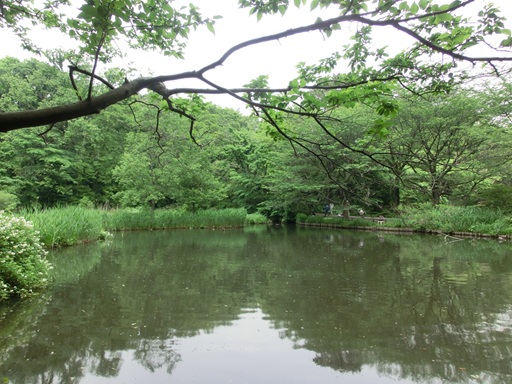
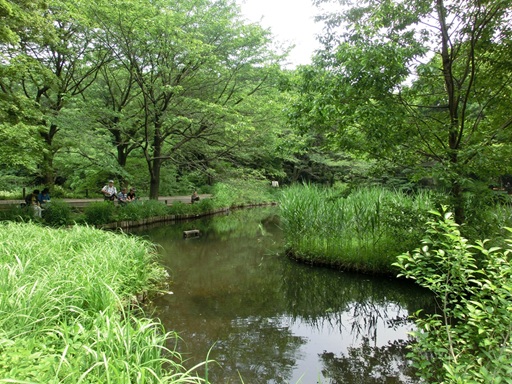
The area around the gourd‐shaped pond was unobstructed by trees, offering an open view.
|
|
The pond was surrounded by a dense forest, making it difficult to walk around it like in a strolling garden with a pond typically in a garden of "Daimyo" , Japanese feudal lords.
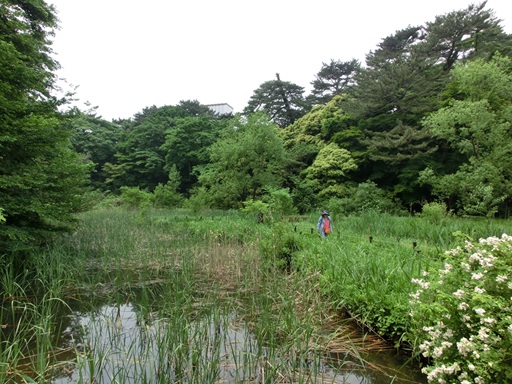
A wetland area stretches around the gourd-shaped pond, and irises were in bloom there.
I walked along the wetland from the gourd‐shaped pond.
I turned back along the forest path and arrived at the south side of the Institute for National Study.
The above photo shows the pond of "Waterfowl".
There are also maple trees around the pond, and I imagine it would be beautiful during the autumn foliage season.
The Waterfowl Pond is at the furthest point of the Institute for National Study, and heading east from here leads to the site of the "Shirokane Chojya",Shirokane Millionaire, residence from the Muromachi Age.
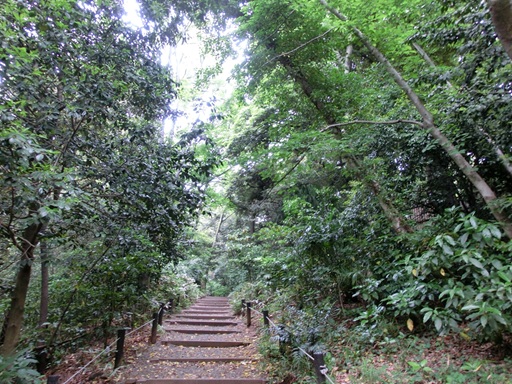
The path to the site of "Shirokane Chojya",Shirokane Millionaire, residence is uphill.
It's a slope that leads over the earthen rampart surrounding the residence site.
|
|
Earthen ramparts continued around the walking path as well.
This lush green area became a gunpowder magazine for the army and navy during the Meiji Age.
During the Taisho Age, it came under the jurisdiction of the Imperial Household Agency and became the Shirokane Imperial Estate.
|
|
|
How to get there
From Tokyo Station, you will take a train on the Yamanote-Loop Line to Meguro. It will take approximately thirty minutes. You will walk to the east from Meguro Station. It will take ten minutes on foot from Meguro Station to the entrance of Institute for National Study.
Other Historical Sites near by:
Sengakuji Temple
Daienji Temple
ARISUGAWA-no-Miya Memorial Park
Roppongi Hills
Konno-Hachiman Shrine
|
|
 Home Page in Japanese: "Shane's HomePage"