Zuiryuji Temple in Takaoka

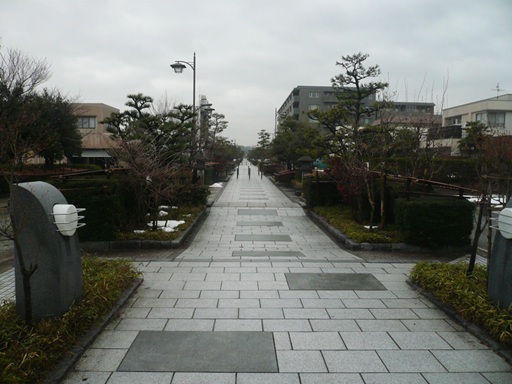
I walked along the road extending westward from the mausoleum of MAEDA Toshinaga (1562 - 1614) . This road, spanning a distance of approximately 870 meters, connects the mausoleum with Zuiryƫji Temple, the temple that served as the family temple for MAEDA Toshinaga.

Please refer the page of "Mausoleum of MAEDA Toshinaga":
http://cf916626.cloudfree.jp/HandE_Japan/TravelDestinations/Chubu/Mausoleum_MAEDAToshinaga_E.html

While it appears to have once been a road lined with dense trees, it is now neatly maintained.

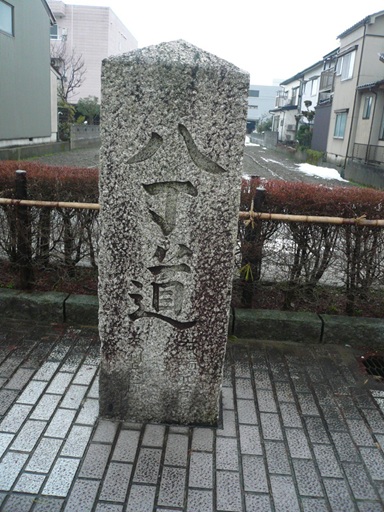
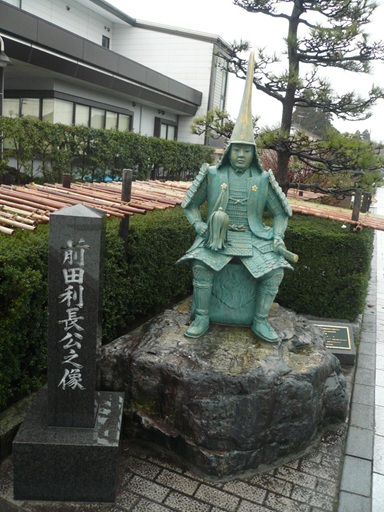
Along the way, there was a stone monument, named "Hatcho-michi" after the road's length, as well as a bronze statue of Maeda Toshinaga.

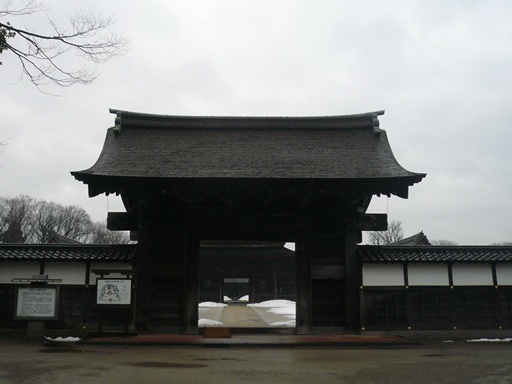
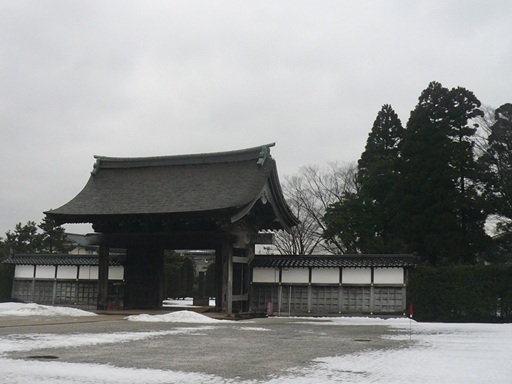
After approximately fifteen minute walk from the mausoleum of MAEDA Toshinaga, I arrived at Zuiryuji Temple. The main gate of Zuiryuji Temple came into view.

As I stepped onto the temple's approach from the residential area along "Hatcho-michi", the atmosphere shifted completely, enveloping me in an air of solemnity and majestic dignity.

Zuiryuji Temple is a grand temple of the Soto Zen sect. The origins of Zuiryuji Temple lie in Hoenji Temple, which MAEDA Toshinaga originally founded in Kanazawa in 1594. It is said that Hoenji Temple was relocated to Takaoka because MAEDA Toshinaga moved his residence from Kanazawa to Toyama, and subsequently to Takaoka. After MAEDA Toshinaga's death, MAEDA ToshitsuneToshitsune (1594 - 1658) , the second lord of the Kaga Feudal Domain, designated Hoenji Temple as Toshinaga's family temple and renamed it Zuiryƫji Temple.

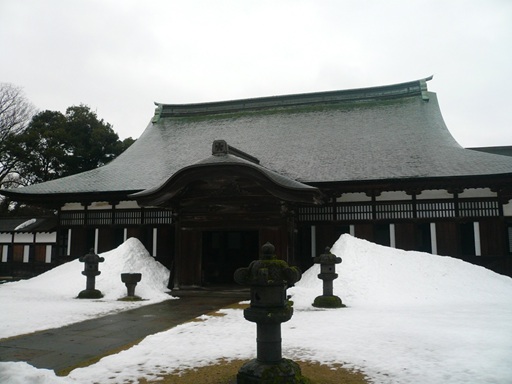
Upon passing through the main gate, a spacious temple precinct came into view.

MAEDA Toshitsune began developing the temple complex around 1640. The magnificent "Shichido garan", a standard seven-building temple layout, comprising structures such as the "Sanmon Gate", the Buddha Hall, and the Dharma Hall", was reportedly completed in 1663, approximately twenty years after construction began.

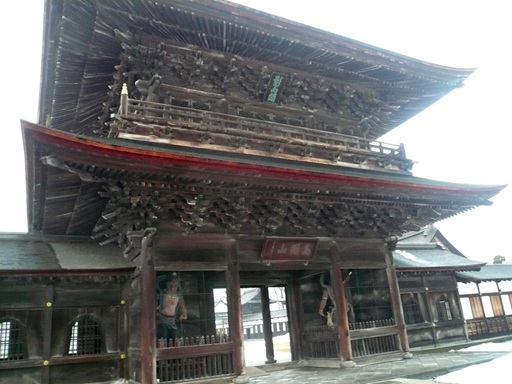
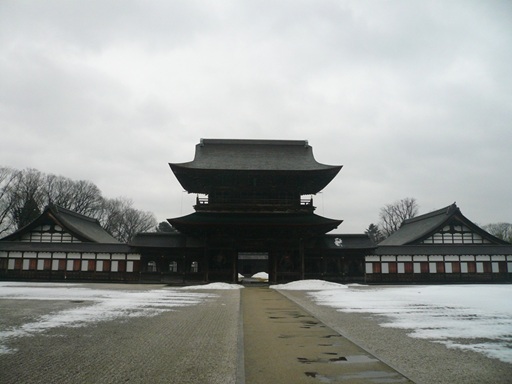
Rising imposingly before me stands the majestic "Sanmon Gate".

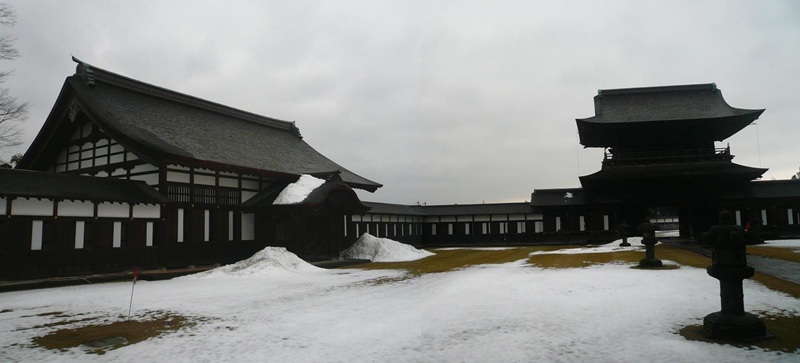
The "Sanmon Gate" was destroyed by fire in 1746 and subsequently rebuilt in 1820. The below picture shows the view of the main gate looking back from in front of the "Sanmon Gate".

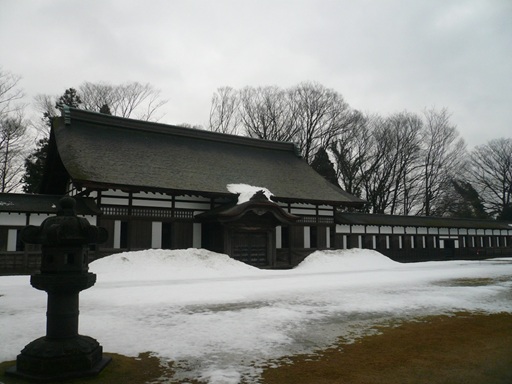
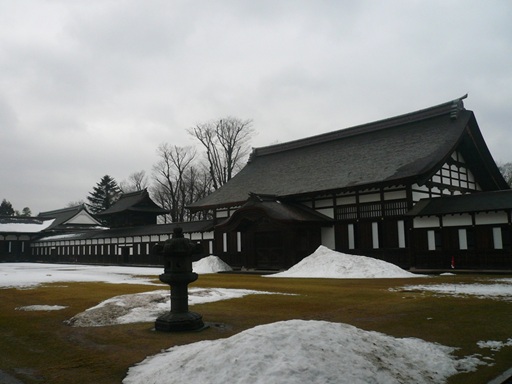
Upon passing through the "Sanmon Gate", you will find the covered corridors extending from both sides of the "Sanmon Gate", enclosing the temple grounds. If you stand in front the "Sanmon Gate", the main service building is located to the right, and the "Zendo", Zen meditation hall, to the left.
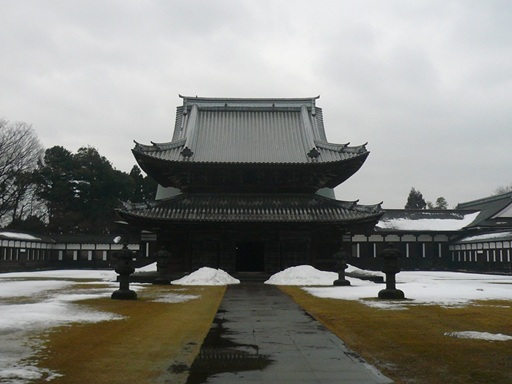
The Buddha Hall stands directly ahead of the mountain gate.

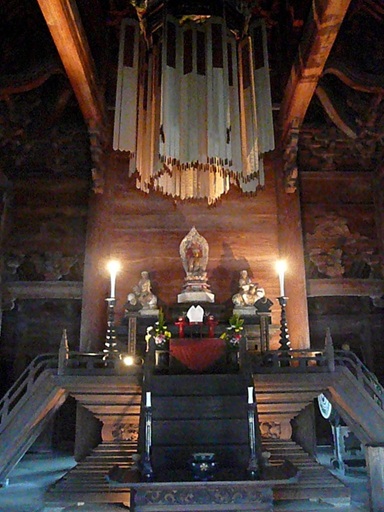
The Buddha Hall is a structure built entirely of Japanese zelkova wood, completed in 1659. Enshrined within the hall is a triad of figures, "Shakyamuni", "Manjushri", and "Samantabhadra".

I gazed upon the three Buddha statues, and the experience was truly mystical.

The Dharma Hall stands behind the Buddha Hall. It was built in 1655. This building is constructed entirely of Japanese cypress.

At Zuiryuji Temple, the Sanmon Gate, the Buddha Hall, and the Dharma Hall are designated as National Treasures of Japan.

Zuiryuji is a truly magnificent temple. It gave me a renewed sense of the prestige and power of the MAEDA clan of the Kaga Feudal Domain, the largest of the more than 200 feudal domains.

How to get there
From Tokyo, take a "Kagayaki" or "Hakutaka" on the Hokuriku Shinkansen, to Shin-Takaoka. From Osaka and Kyoto, take a " Thunderbird" to Tsuruga and change to a "Hokuriku Shinkansen" train to Shin-Takaoka. Zuiryuji Temple is located approximately fifteen minutes on foot from Shin-Takaoka Station.

Other Historical Sites near by:
Tateyama Kurobe Alpine Route
Ruins of Toyama Castle
Toyama Bay
Mausoleum of MAEDA Toshinaga
Yamacho Suji Historical District
Kanayamachi Historical District

Go to the top page of "Historical and Exotic Japan":
http://cf916626.cloudfree.jp/HandE_Japan/HandE_Japan.html

Home Page in Japanese: "Shane's HomePage"
http://cf916626.cloudfree.jp/index.html